
How to see the green comet: a full explanation
Seeing a green comet can be an incredible experience, but it can be difficult to know when and where to look. In this blog, we'll provide all the information you need to spot a green comet in the sky.
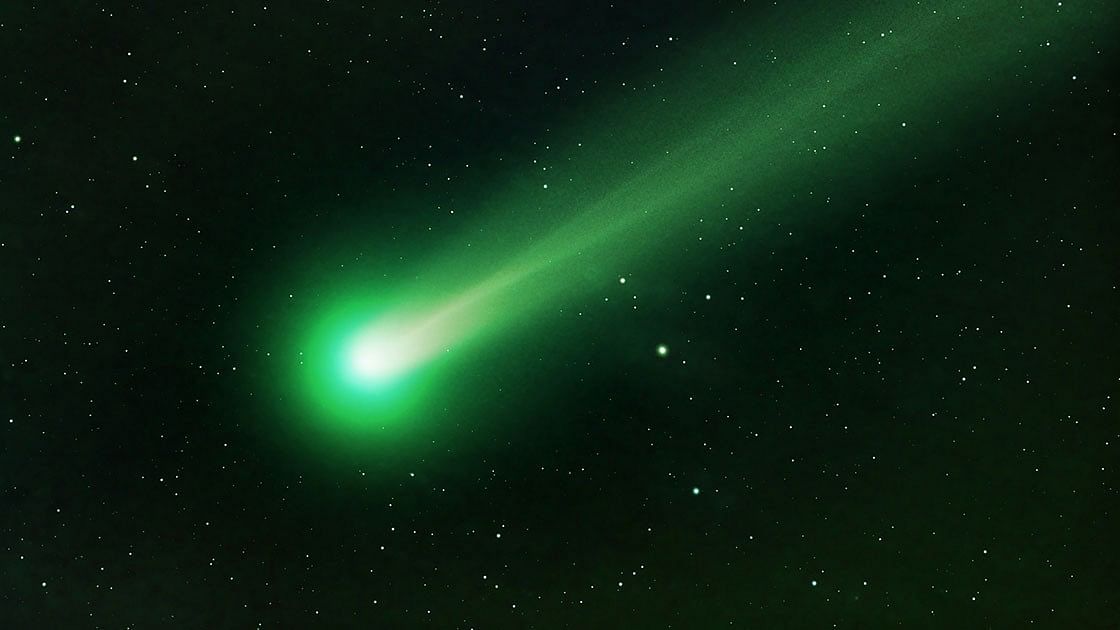
First, it's important to understand what makes a comet green. Comets are made up of ice and dust, and as they approach the sun, the ice begins to vaporize, creating a cloud of gas and dust around the comet's nucleus. The green color comes from the presence of diatomic carbon (C2), which emits green light when it is excited by the sun's ultraviolet radiation.
Now that you understand why comets can be green, let's talk about when and where to look for one. The best time to see a green comet is when it is at its closest approach to the sun, known as perihelion. At this point, the comet will be at its brightest, and its green color will be most visible. However, comets can be difficult to see because they are small and faint, and they move quickly across the sky.
To find a green comet, you'll need a clear view of the night sky, away from city lights. A good pair of binoculars or a small telescope will also be helpful, as these will make it easier to spot the comet and see its green color.
To find the comet, start by checking online resources such as the NASA Jet Propulsion Laboratory's comet watch or the International Astronomical Union's Minor Planet Center. These websites provide updated information on the location and visibility of comets. You can also download a sky-charting app to your smartphone, which will show you the comet's position in the sky and how to find it.
Once you've located the comet, it's best to observe it just after sunset, when the sky is still relatively bright and the comet will be higher in the sky. As you look for the comet, be patient and keep your eyes focused on the area where it should be. You may need to use your binoculars or telescope to spot the comet, as it will be much easier to see with magnification.
When you do spot the comet, take a moment to appreciate its beauty. You may see a faint, fuzzy green blob in the sky, or you may see a bright, green tail streaming away from the sun. Either way, you're witnessing one of the most amazing sights in the night sky.
In conclusion, seeing a green comet can be a once-in-a-lifetime experience, but it requires patience and careful observation. By understanding why comets are green, when and where to look for them, and using the right tools, you'll be well on your way to a successful comet-watching adventure.
Green comet live stream :
There may be live streams available that show a green comet, but they are not guaranteed as they depend on various factors such as the comet's visibility, the availability of telescopes and equipment for live streaming, and the current weather conditions.
To find a live stream of a green comet, you can check websites such as the Virtual Telescope Project or the Slooh Community Observatory, which regularly host live streams of astronomical events. You can also check social media platforms like Twitter and Facebook, as astronomers and space enthusiasts often share live streams of comets and other celestial events.
It's important to note that even if a live stream is available, the quality of the image may vary depending on the equipment used, the conditions under which the stream was captured, and other factors. In some cases, the green color of the comet may not be clearly visible in the live stream, but it is still a unique opportunity to observe a celestial event in real-time.